


All living organisms around us like plants, animals, humans, birds, and even tiny insects are made up of cells. A cell is the smallest unit of life that can carry out all life processes. Just as a building is made of bricks, every living body is made of cells. Some organisms, like bacteria, have only one cell, while others, like humans, have millions of cells working together in an organized manner.
What Is a Cell?
A cell is a tiny living structure that performs essential activities such as taking in nutrients, producing energy, growing, and reproducing. Even though cells are microscopic, they are highly active and organized. Each cell has a specific role, and together they form tissues, organs, and complete organisms. Without cells, life would not exist.
Structure of a Cell
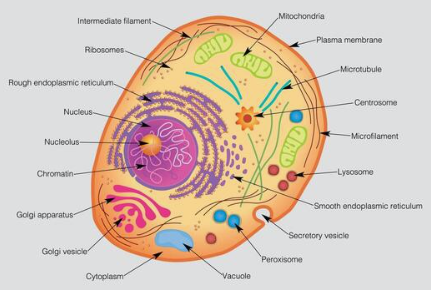
Most cells share a common basic structure. Each part of the cell has a special function that helps the cell survive and perform its duties.
1. Cell Membrane:
The cell membrane is the thin, flexible outer boundary of the cell. It protects the cell and gives it shape. More importantly, it controls what substances can enter and leave the cell. This helps maintain a proper internal environment, which is essential for the cell’s survival.
2. Cytoplasm:
The cytoplasm is a jelly-like substance present inside the cell membrane. All cell organelles float in the cytoplasm. It is the site where most chemical reactions take place, such as digestion and energy production. The cytoplasm helps in the movement of materials within the cell.
3. Nucleus:
The nucleus is often called the control center of the cell. It controls all the activities of the cell, including growth and reproduction. The nucleus contains genetic material that carries information from parents to offspring and guides the cell on how to function properly.
Important Cell Organelles and Their Functions:
Mitochondria:
Mitochondria produce energy by breaking down food. This energy is needed for all life activities, which is why mitochondria are called the ‘powerhouse of the cell’.
Ribosomes:
Ribosomes help in making proteins. Proteins are essential for growth, repair of body tissues, and proper functioning of the organism.
Endoplasmic Reticulum (ER):
The ER acts like a transport system inside the cell. It helps in moving proteins and other materials from one part of the cell to another.
Golgi Apparatus:
The Golgi apparatus collects, packages, and distributes substances produced by the cell to where they are needed.
Vacuole:
Vacuoles store food, water, and waste materials. In plant cells, the vacuole is large and helps maintain the shape and firmness of the plant.
Cells are responsible for carrying out all life processes. They help in taking in nutrients, producing energy, removing waste, and repairing damaged parts of the body. For example, when we eat food, cells help break it down and convert it into energy that allows us to move, think, and grow. Cells also play an important role in growth and development. As we grow, our cells divide and increase in number. This process helps the body grow taller, heal wounds, and replace old or damaged cells with new ones.
Cells help in maintaining health and balance in the body. Each cell has a specific function, and when all cells work properly, the body remains healthy. If cells do not function well, it can lead to diseases and weakness. In short, cells are important because they make life possible. They control all activities of living organisms and ensure that the body grows, stays healthy, and survives.
Article by - Shrobhi
Copyright © MyskoolTimes © 2024 - 2025